|
But what if a simple technology switch could more effectively highlight your organization's website content in search engine results, and thereby make it more likely that visitors would click on your links rather than others? And what if the solution was easy and affordable? I figure you'd probably try it. So, what's this differentiator you can implement immediately for your website? It's called Rich Snippets. I recently logged into my account with a major financial services company for the first time in awhile. The next day, I received an email from the company saying “Hey! Thanks for stopping by our site yesterday! S'up?” That wasn’t verbatim, mind you. But it was close. And it prompts the first in our blog series of simple ideas for successful online nonprofit membership management using Salesforce. Are you rolling out the online welcome mat for your members? How can you tell and how can you improve so that welcome mat is more welcoming? Way back in 2004, at the first Advocacy Developer's Summit, I remember sitting in a circle with some really bright non-profit engineers that were promoting the future of a Friend of a Friend (FOAF) protocol, in which thinking a few years down the road, would easily help you discover relationships between you and your friends and potentially provide insight to help you make buying (and supporting) decisions. Unfortunately, FOAF never really caught on. Instead, the world became smitten with a walled garden called Facebook, which provided an easy and user-friendly experience for making connections between your friends, and sharing your likes and preferences. One of the grand visions of FOAF, at least for me, was the idea that as a FOAF network was built, you'd be able to have rather organic connections between individuals that could allow you to be informed based not on advertising, but on the choices made by your friends. These connections with your friends, while are not expert opinions, tend to have a better correlation with your own interests, and ultimately (hopefully) making your life in a complex choice world easier. Well, 8 years and hundreds of millions of users later, I think Facebook is now on the verge of providing one of the most compelling discovery tools we've ever seen, and the effects of it likely will be profound for organizations, especially advocacy organizations.
It's all about search. Needing to draft your own army to move mountains of paperwork for member management? What if there were ways to reduce the workload and increase effectiveness? Back in August, we posted an article sharing 15 reasons why membership organizations love Non-Profit Soapbox and Salesforce. In it, we offered specific ways the Soapbox platform is being used by nonprofit membership organizations to integrate with their Salesforce instances to increase staff efficiency, bolster member satisfaction, and become more effective in meeting their missions. As we've been building integrated online solutions for membership organizations, we continue to be impressed by the vast potential that connecting this world-class CRM with one's website has to supercharge member organizations.
In thinking about my presentation for Joomla!Day India, one key metric of success stood out amongst all others for the Joomla community: empowerment. In my relatively short 15 years in the open source world, I have yet to find another project that is able to as effectively strike the solid balance between attraction of new members that know little-to-nothing about software development, and the hardcore engineers looking to leverage a power web framework. Based on my years within the Joomla project, and my term serving as a leader of it, I've come to realize that the key differentiator for me has been the community's focus on empowering anyone to contribute. When the Nathan Cummings Foundation came to us in search of a robust online application system integrated with their Salesforce instance to support their Nathan Cummings Foundation Fellowship, we jumped at the opportunity.
It was a great chance to use our Salesforce integration tools in Non-Profit Soapbox to support an outstanding fellowship program that empowers visionary world changers fostering social good. It is also a great example of a foundation working with a B Corporation to foster social good.
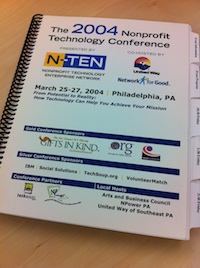
Little did I know that 10 years later, I'd be registering for the same event. It's been an incredible string of events during the past 10 years. The N-TEN community has changed, dramatically, since the early Circuit Rider days, and so has the NTC. I swear that it seems there are more folks hosting booths at the Science Fair these days then there were total attendees back in the early days! So this afternoon, when I started working on my annual registration for the NTC 2013 (early bird, of course), I reflected for a moment. As the N-TEN community has evolved and grown, do I still fit into the new generation of N-TEN folks? Were my interests back in 2004 the same as they are today, and if so, are they being reflected in the type of event that the NTC has become? Did I really manually blow up, by hand, 96 penguins with my PICnet buddy Pradeep back at the NTC 2006 in Seattle? In short: is the NTC right for a guy like me in 2013?
Well, move over Fozzy. The B Corporation website sets a whole new standard for dynamic, visually-compelling Salesforce integration. Take the Soapbox Two-Minute Tour in this video to see how those integrations power a directory of Certified B Corporations:
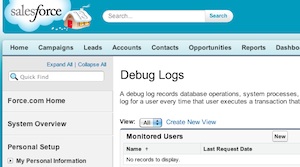
That's when the Salesforce debug log comes to the rescue. Here's a little guide to understanding what the Salesforce debug log does, and how even an accidental techie can quickly make it your Salesforce troubleshooting friend. The New York Anti-Violence Project (AVP): "empowers lesbian, gay, bisexual, transgender, queer, and HIV-affected communities and allies to end all forms of violence through organizing and education, and supports survivors through counseling and advocacy." This great organization's website however, was not reflecting the richness of the organization's work.
Sometimes, this means that the shiny new toys which larger companies play with seem to be an absolute necessity when it comes to their own small non-profit website. This is completely understandable. We live in an upgrade-right-now world, where even our web browsers seem to update on a daily basis, often times without us knowing it. We try to help organizations avoid the shine of the latest fad and focus on raw efficiency gains. That's why a Web lesson learned from the good folks at Etsy (fellow B Corporation!) struck a chord with me. When Etsy implemented the "infinite scroll" in their A/B testing, their findings were really quite interesting. What's an infinite scroll you ask? It's what happens when you're looking at search results on sites like Google Images, where as you scroll to what seems to be the bottom of the page, and then all the sudden, wham, more results start to appear. The vertical scroll is infinitely long! Okay, back to the lesson at hand. What Etsy ended up finding is that while the infinite scroll is definitely trending strongly in web design communities, it's not a tool that you can blindly apply to any website and expect it to actually improve user satisfaction. In fact, in the case of Etsy, it seemed to cause users to avoid taking the preferred route through the Etsy website. What does this have to do with non-profit websites? Quite a bit. Here's a few important lessons we can learn from the Etsy case study on the infinite scroll.
RSS can be a little confusing. I try to remember it like this: it's a no-nonsense way to push content from a website, or pull content into a website.
We discussed the unique opportunity our team has in today's environment to take some important steps forward on new products that we've planned for many years. We've agreed that our Soapbox Engage service's integration with Salesforce, and the tools we've created to help organizations fundraise more effectively online, are key to our clients' success in 2013. Based on these building blocks, we're excited to work with our clients, partners, and friends to continue expanding our services for the sector. This plan dovetails nicely with our existing commitment to further evangelize about the Salesforce Foundation's Nonprofit Starter Pack, a service that enables organizations to utilize the Salesforce service more appropriately for charitable organizations. All of our new products planned for 2013 will have deep integrations with the Salesforce service, benefitting the more than 10,000 organizations currently using Salesforce.
The third payment processor Soapbox interfaces with is Braintree, an option lesser known in the nonprofit space. And, while we're not looking to endorse any single provider, Braintree is worthy of consideration for some very good reasons:
So, to help you short-list what you shouldn't miss in 2013, here's a little cheatsheet we've compiled about the events we make sure to attend each year.
In an increasingly virtual workplace, these physical locations are tougher to come by, and remote workers can feel more disconnected from their peers. While a recent study pointed to the benefits of remote work, we've found that long-term virtual work can sometimes to lead to a sense of isolation for workers of small teams that yearn for higher engagement opportunities. Until teleportation becomes a reality, here's four strategies that we've found increase employee satisfaction and productivity.
Looking back at those early days, I'm incredibly humbled by the impact open source has had on my life and in our communities. Now, older and slightly wiser, I'm excited to continue down that same path. Our company's flagship offerings (Non-Profit Soapbox and Soapbox Engage) heavily leverage open source software, giving us the headspace and time to focus on shaping software to best serve our community. At the same time, I continue to find fulfillment in life by using my experience as a backdrop for evangelism of the open source communities that help us deliver services to those who need it most. While this has recently lead to many hours on planes and trains far away from loved ones, I feel nearly compelled (in a good sense) to work alongside the incredible people building the hammers and nails the world needs to craft more effective and equitable software.
Yesterday, our fellow B Corporation member Arabella Advisors, wrote a great blog by Ginger Elsea about Why Foundations Should Care About B Corps. She laid out the fantastic case for why foundations that are looking to increase their investing portfolio's diversity should invest in B Corporations. As she wrote, "As more foundations pursue impact investing—channeling funds to for-profit businesses that also advance a social mission—B Corp certification can serve as a useful starting point in identifying such businesses." We're big proponents of "if you're going to talk the talk, you better walk the walk", so her words definitely ring true to us at PICnet. What about taking this a step further though? What if foundations not only invested in similarly socially-conscious organizations, they also did business with these well-aligned businesses as well? With the parent non-profit organization of B Corporation, B Lab, continuing to certify and play a watchful eye on the B Corporation community, foundations have a partner that can assist them in finding the best companies to provide them needed services and products. |
 I've often found my self saying the words, "technology is not a panacea", whenever I hear organizations looking to focus what I think are excessive energy on search engine optimization. My thoughts have been that spending that time and money on writing great content, rather than trying to manipulate search engine rankings.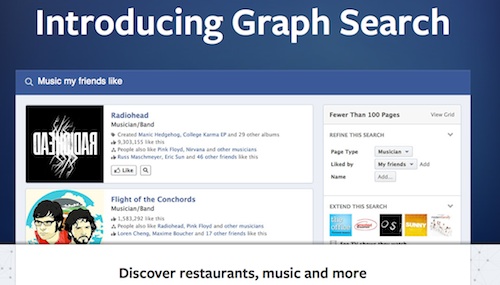
 With
With 
 Back in 2004,
  We shared awhile back about the
  You're just getting used to a slick new
  Working at a company that helps organizations figure out how to stay focused when wandering the candy store that is Web technology can be full of interesting anecdotes. Mostly, it includes stories of accidental techies doing the best they can to make sense of this Web-3-dot-whatever world we're living in, and trying to find ways to best bring in more donation dollars to support their cause.
 Each quarter,
 The good folks over at
  We've all heard the legends about the water cooler discussion that led to the next big idea for an organization. Aside from all the
  Way back in 1999, when dinosaurs were roaming the planet, a friend of mine and I started off on a path that I've been lucky enough to keep walking for 14 years. As students of public policy, we were eager to use technology to provide individuals and organizations with empowering tools to advance the cause of building a more open and just society. From the beginning, we knew that open source software would be the necessary DNA running through our work's blood.
 Donations
 Events
 Petitions
 Forms
Forms Shop
Shop Directories